

What is a Quickshifter? How It Works and Should You Pay Extra?
 Published at September 19, 2026By Saurav Suman
 Prefer Us on
Google News

The days of changing gears with the clutch lever were a thing of the past for years. Modern motorcycles have put an end to that with a quickshifter that lets for faster clutchless shifting. A quickshifter lets motorcycle riders change gears without using the clutch lever.
The complete system can help to make gear changes faster and smoother, particularly when you're using it in a spirited mode and on a highway. Now it can be found on motorcycles from KTM, Yamaha, BMW and even Triumph. But not all riders require to pay extra for it. The value is dependent on the way and where you ride.
In this blog we will discuss: How a quickshifter works, what it is, the advantages, disadvantages, and if it is worth it to the average motorcycle enthusiast?
What Is a Quickshifter?

A quickshifter is an electronic system that allows clutchless gear changes. It uses sensors connected to the gear shift mechanism to detect when the rider wants to change gear.
The system then briefly changes engine operation to unload the transmission. This allows the next gear to engage without the rider pulling the clutch lever.
On some motorcycles, the system works only during upshifts. More advanced setups can support both upshifts and downshifts.
KTM's Quickshifter+ system, for example, allows riders to shift up and down without operating the clutch. It uses sensors to detect the shift request and controls engine operation during the change.
Yamaha also offers a quickshifter on motorcycles such as the R15M. The company says it allows gear changes without using the clutch or throttle.
How Does a Quickshifter Work?

A quickshifter does not simply remove the need for the clutch. It uses the motorcycle's electronics to manage the engine during a gear change. When the rider applies pressure to the gear lever, a sensor detects the movement. The electronic control unit then briefly cuts ignition or adjusts fuel and engine output.
This momentary interruption reduces the load between the transmission components. The rider can then slot into the next gear without closing the throttle or using the clutch.
The exact operation differs between manufacturers and motorcycle models. KTM, for example, describes a system that detects shift lever movement and briefly interrupts ignition timing.
Some systems also manage downshifts. They can raise engine speed to match the lower gear, helping make the shift smoother.
| Quickshifter Type | What It Does | Typical Benefit |
| Upshift only | Allows clutchless upshifts | Faster acceleration |
| Up and down | Handles clutchless shifts both ways | Smoother, quicker riding |
| Adjustable system | Allows changes to shift behaviour | Better rider control |
Quickshifter Benefits for Daily Riding

The biggest advantage is convenience. Riders do not need to repeatedly operate the clutch lever during quick gear changes. This can be useful during highway riding, overtaking and spirited acceleration. It can also reduce the effort involved in frequent gear changes.
However, the benefit can vary significantly in city traffic. Riders still need to manage the clutch when starting from a stop on most quickshifter equipped motorcycles.
A quickshifter also does not make every gear change automatically smooth. Correct engine speed, throttle position and shift timing still matter.
Key Benefits
- Faster gear changes during acceleration
- Less clutch lever use
- Useful during highway overtaking
- Can make spirited riding more engaging
- Advanced systems can smooth downshifts
- Reduces the need to close the throttle during some upshifts
Honda's E Clutch shows how motorcycle manufacturers are taking clutchless shifting further. The system can manage starting, stopping and gear changes while retaining a conventional clutch lever.
Is a Quickshifter Worth Paying Extra For?

Whether a quickshifter is worth the extra cost depends on the rider's usage.
For someone who mainly rides through crowded city roads, it may not be essential. Frequent stops still require clutch control, while low speed riding often needs careful throttle and clutch inputs.
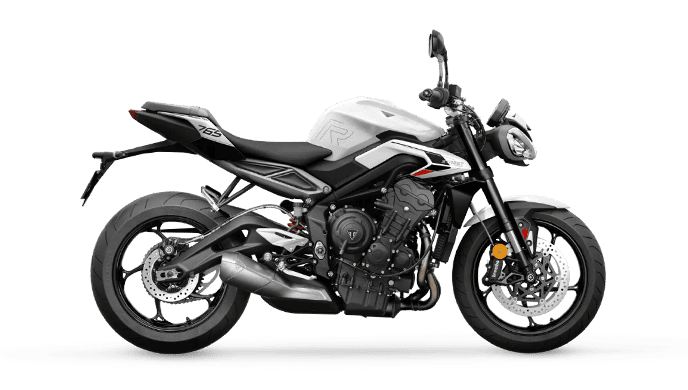
The feature becomes more useful for riders who regularly use highways or enjoy faster acceleration. It can make repeated upshifts easier during strong acceleration. For example, riders considering the Yamaha R15 V4 or Triumph Street Triple 765 R may see more value in the feature if they regularly enjoy spirited riding.
Buyers should also check whether the motorcycle offers an upshift only or bidirectional quickshifter. The latter generally offers more functionality.
The extra cost should also be considered alongside other features. If a higher variant adds a quickshifter along with better suspension, electronics or braking equipment, the overall package matters.
Quickshifter Makes More Sense For:
- Frequent highway riders
- Riders who enjoy spirited acceleration
- Buyers who want more electronic features
- Riders who make frequent gear changes
- Performance focused motorcycle buyers
You May Not Need It If:
- Most riding happens in heavy traffic
- You prefer traditional clutch control
- Your motorcycle is mainly used for short city trips
- The feature requires a large variant price increase
Does a Quickshifter Affect Gearbox Life?
A quickshifter should not be treated as a licence for rough shifting. Smooth and correct gear changes remain important for transmission longevity.
Cycle World notes that aggressive clutchless shifting can place additional stress on gearbox engagement components. It also explains that an electronically controlled quickshift can be less damaging than poorly executed clutchless shifts.
Manufacturers also provide specific operating conditions for their systems. KTM's instructions warn that abrupt load changes can affect vehicle control.
Riders should therefore follow the motorcycle manufacturer's instructions. Using the system within its intended operating range is important.
It is also worth remembering that quickshifters are not identical across motorcycles. Their calibration, operating range and shift feel can differ between models. For example, the system on a KTM 390 Duke may feel different from the setup offered on a larger performance motorcycle.
Quickshifter vs Normal Gear Shifting

With a conventional motorcycle, the rider normally closes the throttle, pulls the clutch, changes gear and releases the clutch.
A quickshifter automates part of this process. The rider applies pressure to the gear lever while the electronics manage the engine response.
This can save time during acceleration. However, a conventional clutch remains useful for slow speed manoeuvres, starting and stopping.
| Factor | Normal Shifting | Quickshifter |
| Clutch use | Required | Not required during supported shifts |
| Shift speed | Depends on rider | Usually quicker |
| City riding | Fully suitable | Useful but not essential |
| Highway riding | Works well | More convenient |
| Cost | No additional feature cost | May cost extra |
| Downshifts | Rider controlled | Available on some systems |
Conclusion
A quickshifter is a useful motorcycle feature, but it is not essential for every rider. Its biggest advantages appear during acceleration, highway riding and spirited riding.
City commuters may not gain enough from it to justify a large price difference. Riders who value smoother and faster gear changes may find the feature more useful.
Before paying extra, buyers should check how the system works on their chosen motorcycle. They should also compare the complete variant package rather than considering the quickshifter alone.
Models from KTM, Yamaha, Kawasaki and Triumph offer different approaches to quickshifting and motorcycle electronics. The right choice ultimately depends on riding style, budget and how often the feature will actually be used.
Also Read: Best Alternatives to the Royal Enfield Himalayan 450 in India


Previous
Next



Check On Road Price
Top News


Yamaha R15 V4 On Road Price in India
More news from Yamaha


Best Bikes from Yamaha Brand

Yamaha R2
 204 CC
 N/A
N/A 
Yamaha XSR 155
155 CC45.5 KMPL
Yamaha MT 15 V2
155 CC47 KMPL
Yamaha R15 V4
155 CC45 KMPL

Latest Yamaha Models
Yamaha R2
204 CCN/A Yamaha R15 V4
155 CC45 KMPL
Yamaha FZ Blue Flex
149 CC50 KMPLUpcoming Bike Models
 Launching Soon
Yamaha MT-09
890 CC19 KMPL
Yamaha YZF-R25
249 CC30 KMPL
Yamaha MT-10
998 CC14 KMPL
Yamaha YZF-R7
689 CC24 KMPL





A-23, 3rd floor, A Block, Sector 9,Noida, Uttar Pradesh 201301
 support@thebikejunction.com
 +91-9773363849
© 2026 BikeJunction. All Rights Reserved.
